Jain Temples of Azimganj, Murshidabad

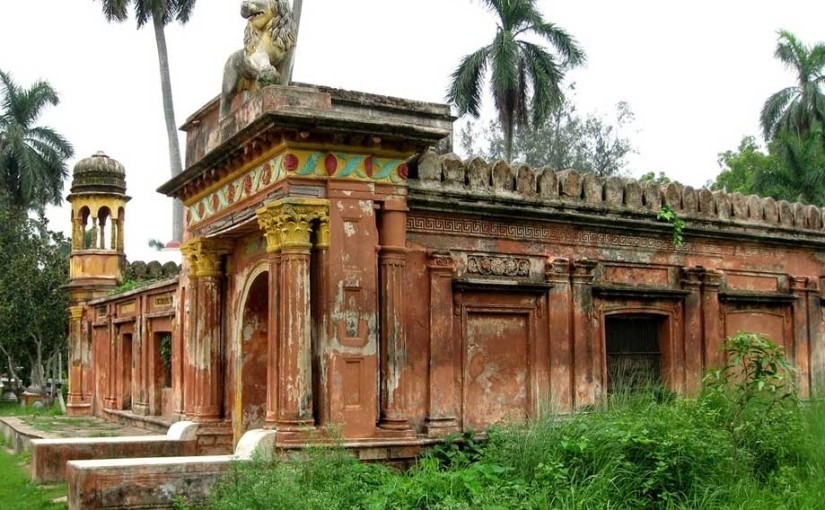
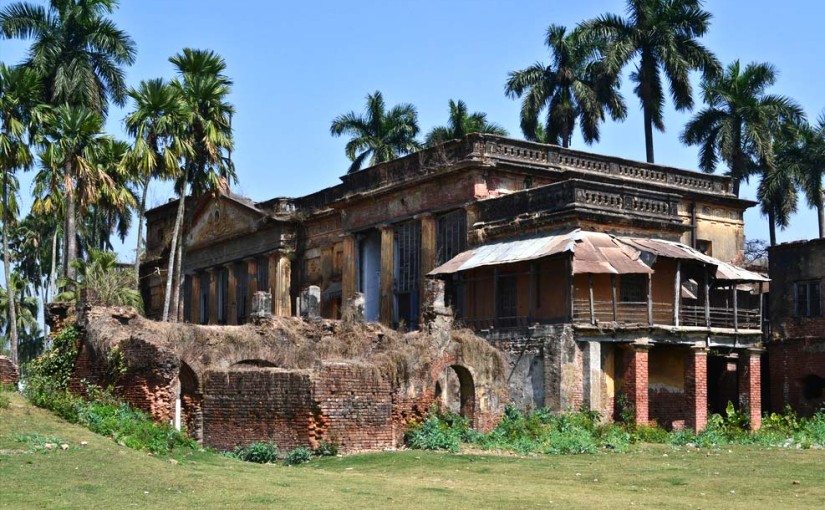
Azimganj small town in Murshidabad is home to 7 Jain temples of immense historical, architectural and spiritual value are located. They are:

Sri Neminathji Temple, Azimganj was built in Samvat 1943 by Shree Singh covering an area of 2933, 2616 Sq. Mt.

Sri Padam Prabhuji Temple, Azimganj was constructed in 1880 AD by Yati Bijay Chandji Khattargachhit covering an area of 764.0173 Sq. Mt. The idols are 500 years old.

Sri Sumatinathji Temple, Azimganj was built in 1856 AD by Uttam CHandji Nahar and was rebuilt by Setab Chandji Nahar in 1897 AD. This temple covers an area of 421.8674 Sq. Mt.

Sri Sambhavnathji Temple, Azimganj was founded in 1886 AD by Rai Dhanpat Singhji Dugar and covers an area of 3665.6731 Sq. Mt. This temple is home to the larges idol of Jain Swtambaras in Eastern India.

Sri Chintamani Parasnathji Temple, Azimganj was built in 1888 AD by Manhot family and the idols are 500 years old.

Sri Shantinathji Temple, Azimganj was constructed in 1873 AD by Gulab Kumari Bibi and one of the idols belongs to Samvat 1510.

Ram Bagh Samalia Parasnath Mandir and Dadabari, Azimganj was built in 1870 AD by Shree Singh. This temple complex is also home to temples from Jangipur, Kiaganj, Cossimbazar which were rebuilt here.
Back to Murshidabad

Cossimbazar Kuthi, Murshidabad

Cossimbazar Kuthi is a relatively less popular tourist spot in Murshidabad. The bazaar area used to be famous due to its silk production which has reduced these days. However, the Cossimbazar Kuthi stall stands at present. During its heyday Cossimbazar Kuthi used to be the residence of Babu Jagabandhu Roy, who was a high class Kulin during the Nawab’s time. He also became the chief of the Cossimbazar Silk Factory in 1760AD. It is also known that Job Charnock had worked in the capacity of assistant in this Kuthi for INR 300.

Back to Murshidabad

Dutch Cemetery in Murshidabad

The Dutch Cemetery is located next to the Cossimbazar railway station at Kalkapur where the Dutch owned huge factories in the year 1666 AD were based. The grandeur of the Dutch has been ruined and small tombs of 43 in number remain to this day. Most of the monuments were built between 1721 and 1792 AD. The oldest monument at the Dutch cemetery belongs to Daniel van der Muyl who died in 1721. Most of the monuments are pyramidal in shape with cenotaphs mentioning the names. Some of the popular and relatively less ruined ones include Gregorius Herklots, Matthias Arnoldus Brahe, tamerus Cantes Vischer. The cemetery is maintained by the Archaeological Survey of India.

Back to Murshidabad

Jafarganj Muqbara near Hazarduari Palace, Murshidabad

Jafarganj Muqbara or cemetery was built on an area of 3.51 acres by Mir Jafar. It is located approximately half a mile north to the Hazarduari Palace premises inside the bigger campus of Namak Haram Deuri. The cemetery is enclosed within waved walls and is the final resting place of the Nawabs belonging to the Najafi dynasty from Nawab Nazim to Humayun Jah. Nawab Nazim Syud Ahmed Najafi’s tomb was later shifted to Karbala in Arab. It is also home to the graves of Syud Ahmed Najafi (Mir Jafar’s father), Shan Khanum Begum (Alivardi Khan’s sister), Munny and Babbu Begum (Mir Jafar’s widows), Muhammad Ali Khan (Mir Jafar’s brother), Ashraf Ali Khan and Ismail Ali Khan (Mir Jafar’s brother-in-laws).  This cemetery is now maintained and administered by the Archaeological Survey of India and the entry fee is 3 INR only.

Back to Murshidabad

Chalk Masjid or Mosque in Murshidabad

The Chalk Masjid or Chowk Mosque in Murshidabad is quite a popular tourist attraction located in the south eastern side of Hazarduari Palace. It was constructed by Munny Begum, consort of Mirjafar in 1760. The Chalk Masjid stands tall on the site of Chahel Setun built during the period of Murshid Quli Khan. The exterior and the interior of the masjid is adorned with beautiful and prolific cartouche, vegetal motifs and arch shaped recess with stucco. The mosque has a grand appearance due to the 5 domes in the center with 2 ‘chau-chala-end-vaults’. It is called the ‘Chowk’ because it is an intersection of 5 roads serving as the biggest market area of the city. Pious Muslims gather inside the mosque to observe Id-ul Zoha, Id-ul Fitr, and Ramzan.

Back to Murshidabad

Ghari Minar – Hazarduari, Murshidabad

The Ghari Minar or the Clock Tower of Murshidabad, West Bengal is located on coordinates 24°11′15″N 88°16′10″E / 24.187381°N 88.269315°E is a famous tourists spot. It is located to the south of Hazarduari Palace in the Nizamat Fort premises. It was erected in the garden area of Nizamat Fort probably for passengers traveling by boat and sailors. The Ghari Minar comprises of a heavy bell, the dial of a clock facing east towards Bhagirathi River and 4 masonry shields on 4 corners on the ground supported by 4 masonry lions. It is also known as the ‘Big Ben of Murshidabad’, the handles and figures of the clock being visible from the opposite bank. It was designed by Sagore Mistri, the same person who constructed Hazarduari Palace. He was the assistant to Colonel Duncan MacLeod. 

Back to Murshidabad

Tussar Silk in Bankura and Murshidabad

Silk in Bankura and Murshidabad

Tussar Silk is produced from silkworms. It is also known as Tusser, Tushar and Tussah and the sarees made from this particular silk is very popular in India. Its popularity is due to the gold sheen and has shorter fibres. It is the chosen material for saris and also punjabis for Indian men. The gold sheen makes it appear rich textured and also shimmering. Bulk production is Tussar silk is done in India out of which around 40% is from West Bengal. The tussar silk sarees produced in Bankura are famous for their kantha stitch which is a particular type of stitching process done by hand instead of machines. Kantha stitched silk sarees are quite expensive and exquisite. Tussar silk sarees are available in various beautiful colors. Tussar silk is also used to make punjabis for men and salwar suits for ladies. These traditional apparels also appear beautiful made from this silk. Producing Tussar silk is considered to be a cottage industry in Bankura where a large number of handlooms are found. This is a tradition of Bankura and thus the weavers still maintain the conventional handloom process to produce the silk sarees. Tussar Silk is also known by another name which is Kosa Silk. Tussar Silk clothes are exported to Gulf countries, to the USA and also various European countries.

how-to-make-tussar-silk-bankura-murshidabad

Some of the characteristic features of Tussar Silk are:

  • Various natural shades
  • Light and airy
  • Provides a comfortable and cool feeling
  • Rich coarse texture
  • Delicate in nature


Maintaining Tussar Silk


Maintaining tussar silk clothes takes a little caring. Dry washing the clothes is the safest option so that it retains its natural texture. You can also use cold water for clothes other than sarees to wash off the dirt. But remember to wash it with gentle hands since it’s delicate. Avoid using chemical bleach and never dry in directly under the sun. Silk needs to breathe and hence you must not store in inside paper. Fold it nicely and store it. Some of the most popular colors in tussar silk are magenta, red, turquoise, gold, dark teal, ultramine, chocolate and purple.

Baluchari Sarees


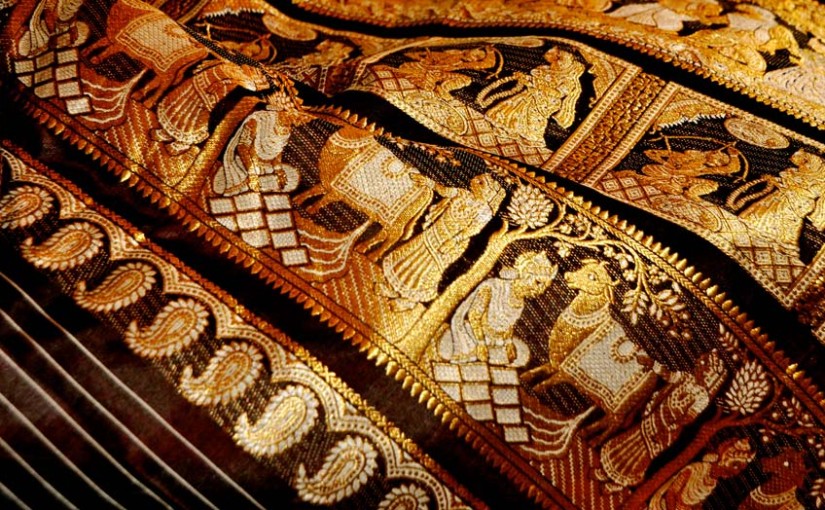
The Bishnupur region in Bankura is famous for producing Baluchari sarees that are made from tussar silk with particular types distinct of patterns on them. Woven on Jacquard punch-card looms, the Baluchari sarees have pallus and borders with episodes from Mahabharata woven on them. These exclusive sarees woven by the weavers are beautiful specimens of traditional art. However, making Baluchari sarees entail a lengthy process. The silk strands are separately dyed and put in a loom after which punch cards hanging from the upper part of the loom are used to make the designs on the strands. The punch cards shave holes in them and are rectangular in shape with various designs on them. The dyed strands are made to pass through these holes and accumulate into precise forms on the loom making some of the most desirable sarees made from silk.

Image Source: Flickr

Footi Mosque, Murshidabad

Footi Mosque or masjid as it called in Urdu is an unfinished work of Nawab Sarafaraz Khan. It is located at a distance of a mile from Hazarduari Palace. Though unfinished the mosque has some unique architectural features that attract tourists to this spot. It is said that Sarafaraz Khan built this structure in one night.

Back to Murshidabad

Kathgola Palace - Katgola Bagan

Kathgola Palace, Murshidabad

The Kathgola Palace built in the garden premises of Raja Dhanpat Singh Dugar and Lakshmipath Singh Dugar is located in  half a km South-East part of Mahimapur (modern Nashipur) town in Murshidabad. It is an impressive structure constituting a central drawing room, a library, billiard room, bedroom and dining room. Built during 1870s as a rest house amidst the garden it has porches on all 4 sides. The pool sides are beautiful providing natural ventilation. The fantastic view of the countryside from the second floor will mesmerize you. Also there is the Adinath Temple which is of immense importance to the Jains.

Back to Murshidabad

Image Source: Flickr

Nasipur Palace - Nasipur Raj Bari, Murshidabad

Nasipur Palace, Murshidabad

According to Holiday HotSpot, Nasipur Palace, old name Mahimapur Raj Bari is one of the primary attractions of Murshidabad which generally brims with visitors. Constructed in 1723-24 by Murshi Quli Khan this imposing structure has high minarets, huge domes and also a cemetery of the Nawab just below the staircase. Ramachandra Temple, one of the largest temples in Murshidabad is inside the palace compound. The Nasipur Palace is only 1.5kilometers from the Railway station on the Berhampore-Lalgola route.

Back to Murshidabad

Image Source: Flickr